If your basement took water in the July 27 or August 2, 2026 storms, you may still be working through an insurance claim or waiting for the space to dry. This guide covers the order that tends to work: safety, your insurer, documentation, drying, and then rebuilding. It also records the local support offered after the floods and what is still available.
Do these four things first
- Do not enter until it is safe. Standing water near an electrical panel, outlets, or a furnace is a hazard, and water carrying sewage is a health risk. If either applies, call your insurer, your municipality, and a qualified cleanup company before you do anything yourself.
- Call your insurer. The Insurance Bureau of Canada recommends reporting as soon as possible. Ask what your policy covers: overland flood coverage and sewer backup coverage are optional add-ons in Canada, not standard inclusions (Insurance Bureau of Canada).
- Document before you move anything. Photograph the water level and the damage, make a written list of what you lost, and keep every cleanup receipt. Your insurer will ask you to complete a proof of loss form, which you typically have to return within 30 days (Insurance Bureau of Canada).
- Report the flooding to your municipality. In St. Catharines, call Citizens First at 905.688.5600 or email citizensfirst@stcatharines.ca (City of St. Catharines). In Niagara Falls, call At Your Service Niagara Falls at 905-356-7521. Municipal reports help your city make the case for wider recovery funding.
Document before you clear anything out
Curbside pickup deadlines push you to get soaked material out fast. Your insurance claim pulls the other way. The Insurance Bureau of Canada advises keeping damaged items unless they are dangerous or a health hazard, and photographing and listing everything first (Insurance Bureau of Canada).
Photograph and list before the bin, not after. Take room-wide shots that show the water line, then close shots of individual items with anything that identifies the make or model. If you do that in the first hour of clearing each room, a pickup date no longer threatens your claim.
When can repairs actually start?
Not while anything is still wet. Cleanup comes first: water removal, handling of any sewage contamination, discarding materials you cannot salvage, and drying the structure out. Your insurer's restoration contractor or a qualified cleanup company should handle that work. The City of St. Catharines points residents to Health Canada's flood cleanup guidance for safety information.
Two points from that guidance matter before you plan anything. Health Canada says your house and furnishings are less likely to grow mould if they are dried within 48 hours, so drying is urgent even when the rebuild can wait. It also treats sewage-contaminated water as a separate category that needs greater precautions, and says children, pregnant women, and people with respiratory problems should never handle water or materials contaminated by sewage.
Start rebuilding once the space is clean, dry, and confirmed safe. If you put finishes back over damp framing or subfloor, you set up a second, more expensive repair later.
What post-cleanup rebuilding usually involves
The City of St. Catharines' list of accepted flood waste gives a clear picture of the work ahead: drywall, insulation, flooring, carpeting, wood, and plumbing pipe. What comes out is broadly what goes back in.
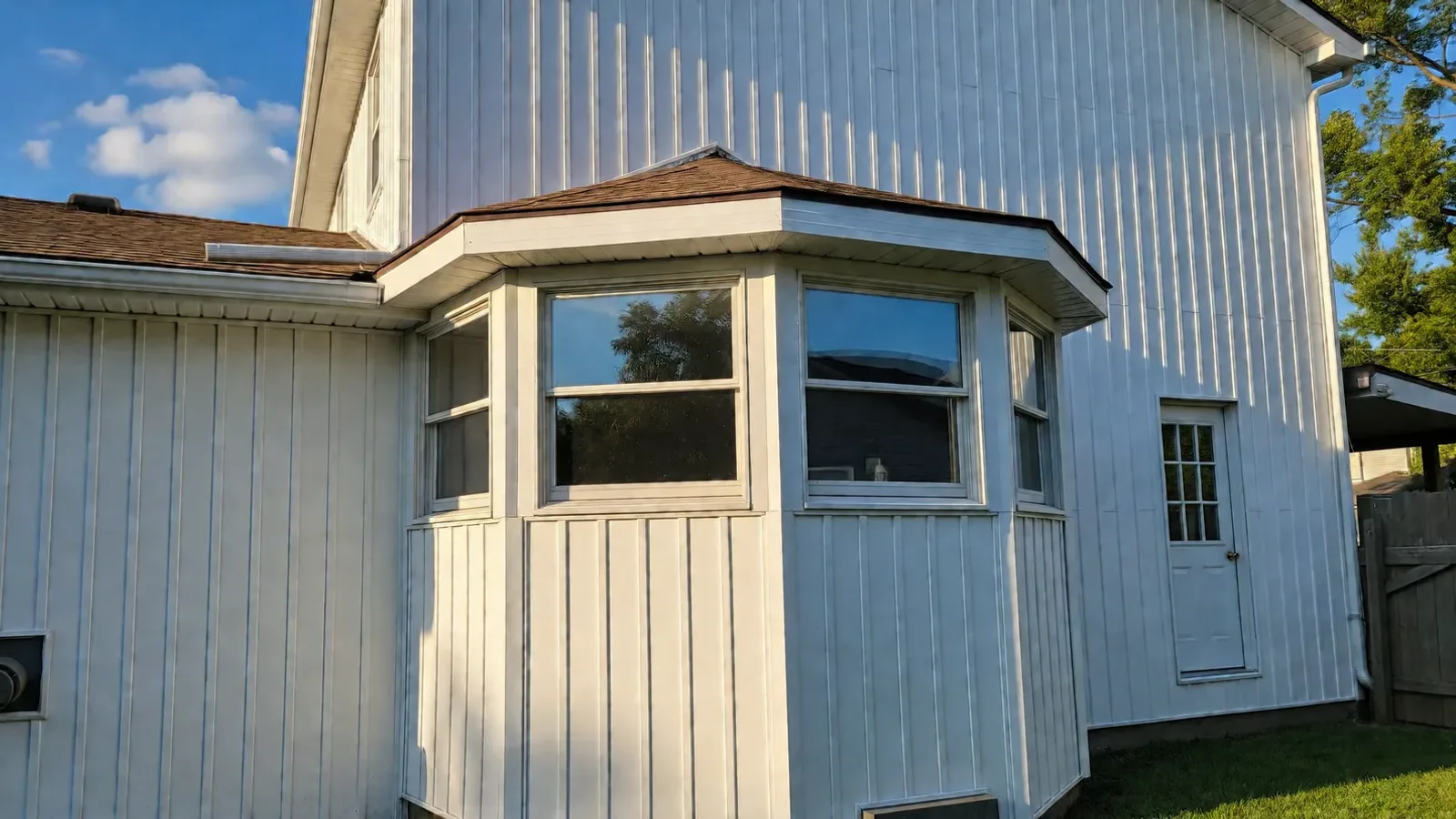
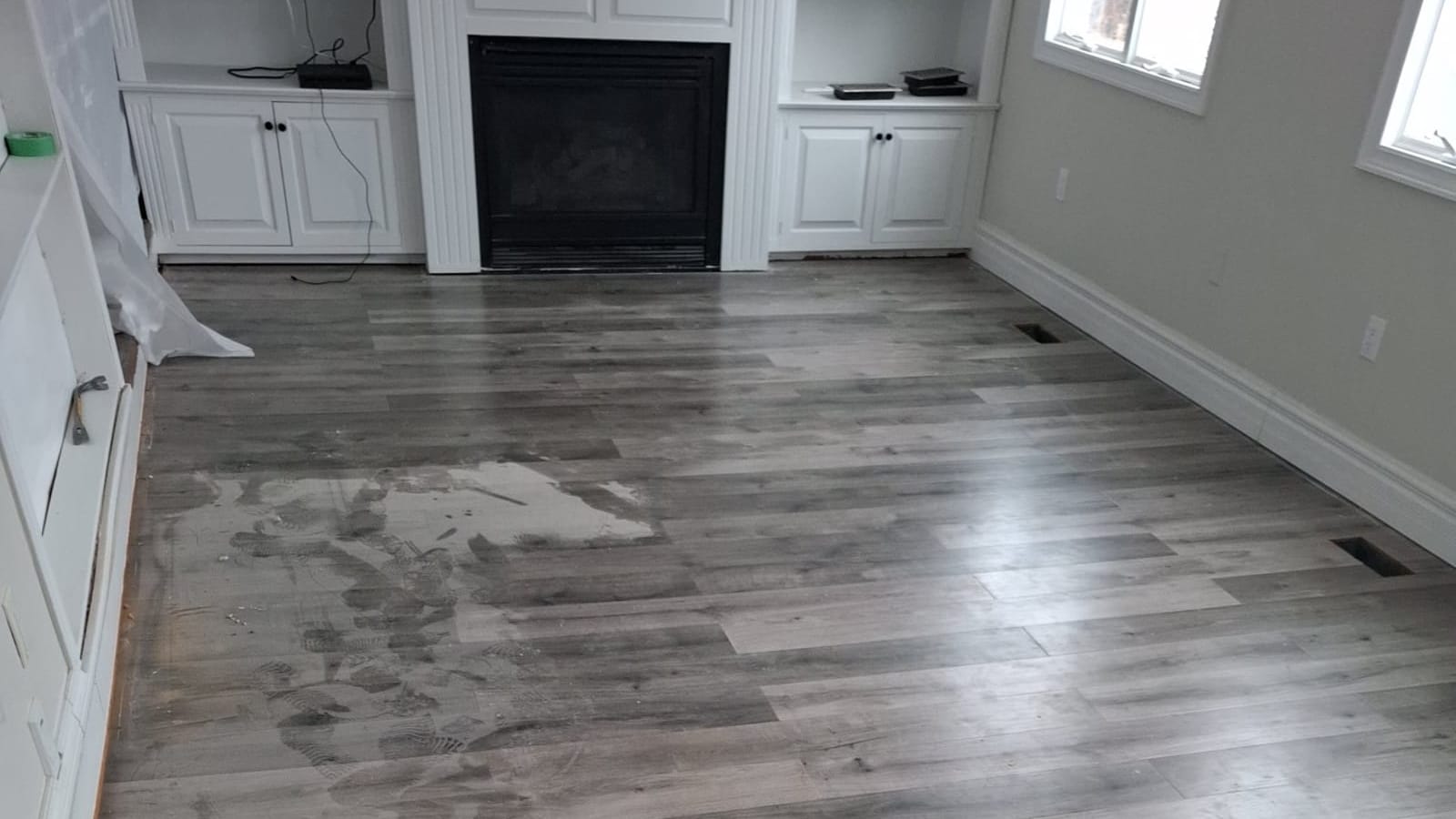
For most finished basements, that means new drywall and insulation on the affected walls, replacement baseboard and door trim, new flooring and transitions, repainting, and rebuilding any built-in storage, shelving, or vanity you removed. Orestorations is a Niagara renovation contractor, and this is ordinary renovation work: interior and exterior finish work of the kind shown across our completed projects. We do not do emergency cleanup, water extraction, or remediation, and you should not book rebuilding until the drying stage is done.
What happened across Niagara
The City of St. Catharines recorded approximately 138 mm of rain in Port Dalhousie and 126 mm in Port Weller overnight on July 27 and 28, then over 100 mm across most of the city during the August 2 storm (City of St. Catharines). Mayor Mat Siscoe declared a State of Emergency on August 3 (City of St. Catharines). The City ended that declaration on September 4 (Niagara At Large).
Niagara Falls opened a separate registry for properties affected by the August 2 flooding (City of Niagara Falls). Niagara Region also ran temporary flood waste services in several municipalities during August.
Support offered after the August 2026 floods
Closed: flood waste collection and registries
These programs ran in August and have ended. We list them so you can match them against receipts or claim notes.
- St. Catharines enhanced collection. The City ran enhanced curbside pickup of flood waste, waived tipping fees at local landfill sites, and set up large drop-off bins for flood debris. On September 2, the City reported that "Enhanced collection services have now ended, and we have transitioned back to regular waste collection" (City of St. Catharines).
- Niagara Falls Flood Recovery Support Registry. Residential owners and tenants affected by the August 2 flooding could register for an extra curbside collection on August 10 and free drop-off passes for Niagara Region waste depots. Registration closed at 3:00 p.m. on August 7, 2026 (City of Niagara Falls).
- Niagara Region temporary flood waste services. The Region's flood-response page is no longer online. Call the Region's Waste Info-Line at 905-356-4141 to ask about regular collection and depot options.
Still listed by the City of St. Catharines (checked September 12, 2026)
The City's 2026 Flood Support Programs page lists these:
- Community Care flood hotline. Community Care of St. Catharines and Thorold runs a flood hotline at 905.984.8953 for help with needs such as food and cleaning supplies.
- Emergency Assistance. This provincial program gives short-term financial help to people in an immediate financial crisis. It is not available to everyone affected by flooding; you have to meet financial eligibility requirements (Government of Ontario).
- Emergency Flood Alleviation Program (Emergency FLAP). The City is developing this program, pending a confirmed funding source, to reimburse eligible homeowners for 90 per cent of the cost of flood protection devices and installation, up to $5,000. The City says it cannot guarantee the rebate for all applicants.
The City's standing Flood Alleviation Program page still describes rebates of up to 90% of eligible costs, to a maximum of $5,000, for backwater valve installation and weeping tile disconnection. It applies to single-detached and semi-detached homes built before 2012. Email FLAP@stcatharines.ca to confirm it is accepting applications before you book the work.
What about provincial disaster assistance?
Disaster Recovery Assistance for Ontarians reimburses up to 90% of eligible costs to a maximum of $250,000 per application, after a $500 deductible. The province has to activate the program for a specific area before anyone living there can apply (Government of Ontario).
When we checked on September 12, 2026, no Niagara municipality appeared on Ontario's list of activated areas. In August, CBC News reported that the office of the Minister of Municipal Affairs and Housing was working with the City of St. Catharines to determine whether uninsured damage may be eligible (CBC News). Check the Ontario page yourself before you count on this coverage.
- Should I wait for my insurance adjuster before starting repairs?
- Talk to your insurer before repair work begins. Your claim depends on documentation, and the Insurance Bureau of Canada advises keeping damaged items unless they are dangerous or a health hazard. Emergency steps that prevent further damage are a separate matter from finished repairs.
- Is basement flooding covered by home insurance in Ontario?
- Not automatically. The Insurance Bureau of Canada notes that both overland flood coverage and sewer backup coverage are optional add-ons rather than standard inclusions, so coverage depends on the specific policy you purchased.
- How long should a flooded basement dry before rebuilding?
- There is no fixed number. It depends on how much water entered, what materials were affected, and the drying method used. The cleanup professional or restoration contractor handling the drying should confirm the space is dry before anyone installs finishes.
Once cleanup is complete and the space is dry and safe, call Orestorations at (437) 259-7366 to discuss post-cleanup basement repairs. To get the most from the visit, read our guide on how to prepare for a renovation quote visit.