Whether you should repair or replace a deck depends on where the damage is. Worn boards, a loose railing post, or a few popped screws sitting on a solid frame are usually repair work. Soft or rotten posts, joists, beams, or the board that attaches the deck to the house point toward a rebuild conversation, because those parts carry the load.
Fall is a good time to look. Leaves are coming down, you can see under the deck, and you have the winter to plan if the answer is a rebuild. This guide shows what to check, how the choice changes the permit question in Niagara, and what real Niagara Falls rebuilds looked like before work started.
Where the damage is decides the answer
Deck boards and railings are the parts you see. The frame underneath is the part that holds everyone up. That is why the same amount of visible wear can mean very different jobs.
| Part of the deck | Signs to look for | Usually points toward |
|---|---|---|
| Deck boards | Splits, cupping, worn finish, a few soft boards | Repair, if the frame below is sound |
| Railings and stairs | Wobble, loose balusters, loose or worn treads | Repair or partial rebuild, depending on what they attach to |
| Joists and beams | Soft spots, sagging, crumbling wood, rusted hangers | Rebuild conversation |
| Posts and footings | Rot at the base, posts sitting on bare ground or pavement, leaning | Rebuild conversation |
| Ledger (where the deck meets the house) | Water staining, rot, missing flashing, nails only | Rebuild conversation |
The table is a starting point, not a verdict. One rotten joist on an otherwise solid deck can be a localized repair. Many soft spots across the frame are a different story.
Check your deck in about 20 minutes
You don't need special tools. A flashlight and a screwdriver cover most of it. The steps below follow the North American Deck and Railing Association's deck safety tips and the Canadian Wood Council's guidance on assessing decay.
- Walk the surface. The deck and stairs should look even, with no sagging, and they shouldn't sway or move when you shift your weight.
- Shake the railings. Railings and handrails should be firm, with no give.
- Probe the wood. Press a screwdriver into areas that stay damp: near the house, at the base of posts, and around fasteners. NADRA says decay may be present if the tip easily goes in a quarter to half an inch (about 6 to 12 millimetres), or if the wood feels soft and spongy.
- Try a splinter. The Canadian Wood Council describes a "pick test": lever up a thin sliver with a knife. Sound wood splinters in long pieces. Decayed wood breaks off short, like a carrot snapping.
- Look where the deck meets the house. NADRA calls the ledger board a common source of deck failure. Look for water staining, debris trapped at the joint, and missing or damaged flashing. NADRA also notes that a ledger should not be fastened with nails only.
- Check the fasteners. Rusted or corroded screws, nails, and hangers can weaken the wood around them.
Don't rely on looks alone. The Canadian Wood Council says wood can look normal and still have lost significant strength, and that by the time you notice decay, the wood has typically lost substantial strength already.
When a repair makes sense
A repair is a reasonable plan when the problems are on the surface and the structure checks out. Common examples:
- Replacing a few split or worn deck boards
- Tightening or replacing loose screws and corroded fasteners
- Re-securing a stair tread or a railing section that attaches to solid wood
- Cleaning and refinishing worn boards
Small areas of rot can sometimes be repaired too. For a small, localized, non-critical spot, the Canadian Wood Council advises removing all the decayed wood plus a margin of sound wood around it (its rule of thumb is about 60 centimetres on each side), treating the remaining wood, and replacing the removed pieces with treated or naturally durable wood.
When treated lumber is cut or drilled during a repair, Wood Preservation Canada explains that the cuts expose wood the preservative didn't reach. Brushing a field treatment onto cut ends and holes helps keep that protection in place.
When a rebuild makes more sense
A rebuild is worth discussing when the problem is the part that holds the deck up. The Canadian Wood Council says that when decayed wood is supporting load, you should have a structural engineer or other appropriate expert assess it before repairing.
Signs that often lead to a rebuild conversation:
- Soft or rotten wood in posts, beams, joists, or the ledger
- A deck that sags, leans, or moves when you walk on it
- Posts sitting directly on the ground or pavement instead of on proper footings
- Damage spread across many areas, so the repair list starts to look like a new deck
- A layout that no longer works, such as stairs in the wrong place or a platform that's too small
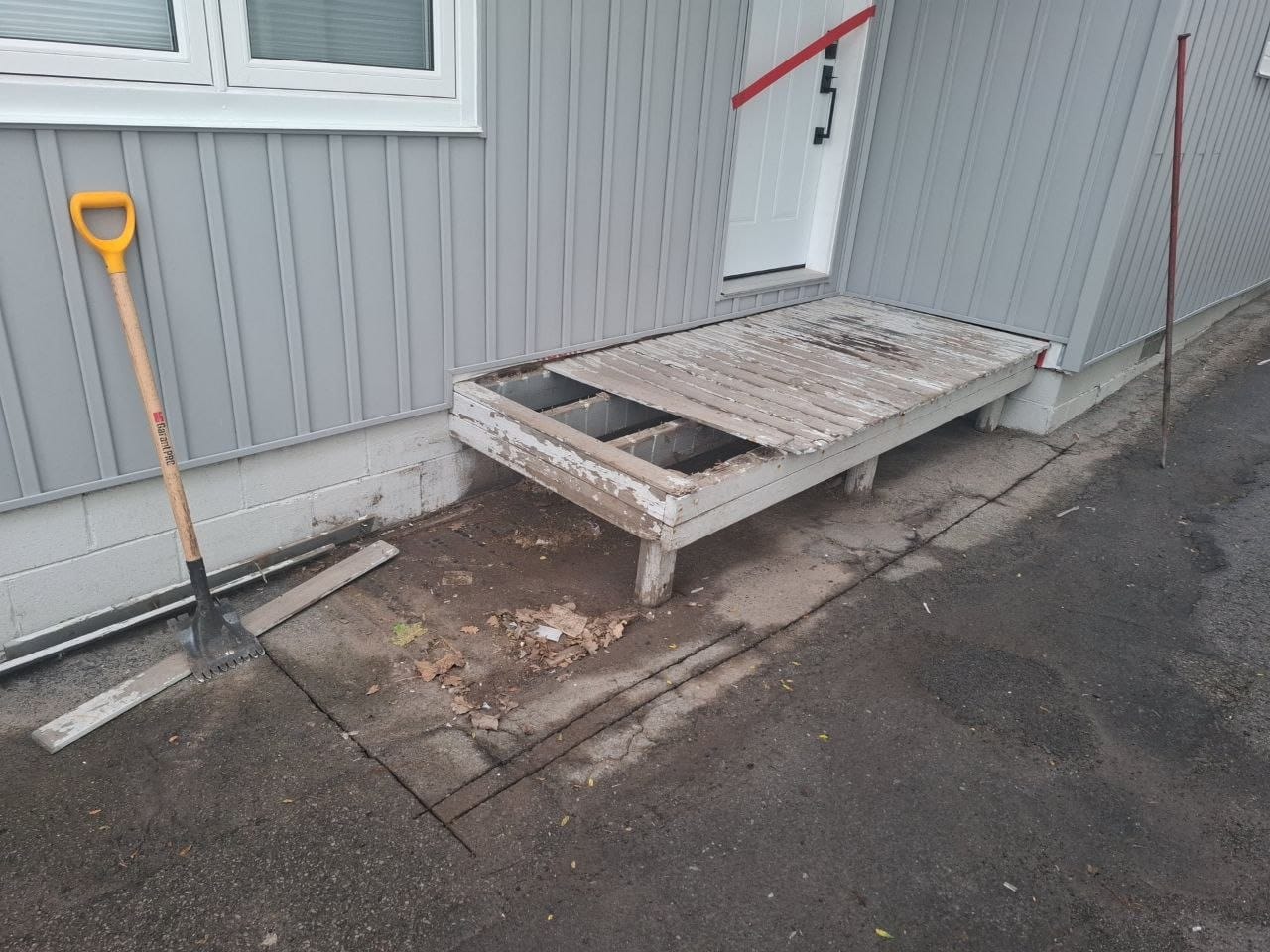
This side entry in Niagara Falls is a good example of wear that goes past the surface. In the before photo, the finish has peeled away, part of the surface has been lifted to expose the frame, and the platform stands on short legs resting on the pavement. New boards on top wouldn't change what the platform stood on. The rebuild started from the base: concrete base prep, new framing and stairs, grey decking, and a white railing. You can see the full photo set in the Niagara Falls side deck build.
Old entry steps can be a rebuild opportunity
Sometimes the question isn't only repair or replace. It's whether the entry still suits the house. At another Niagara Falls home, the front entry was a set of old concrete steps with a metal railing. The crew replaced them with a framed entry deck, new stairs, wood skirt boards, and a railing with dark metal balusters.
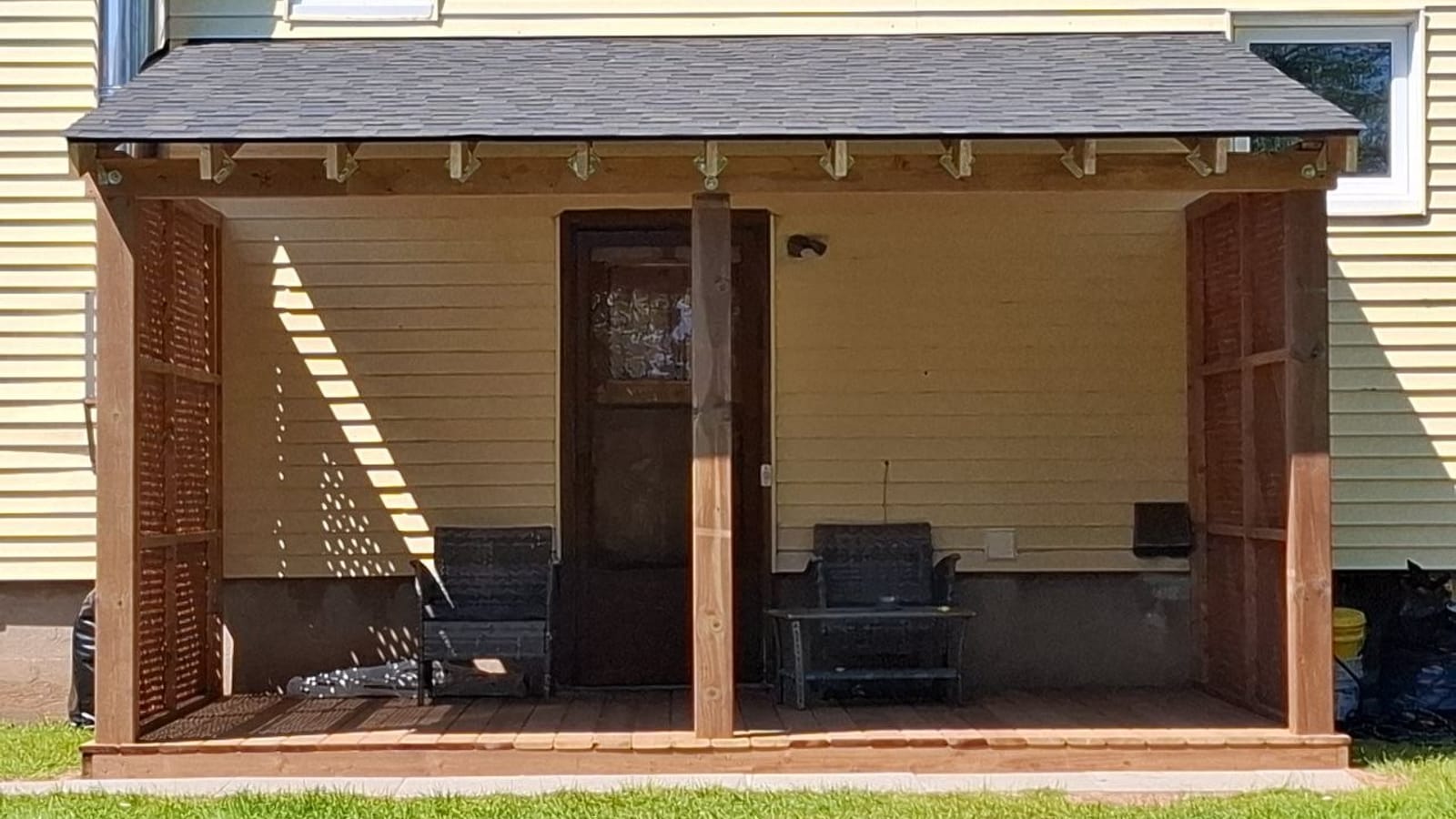
At the back of the same house, the crew built a covered deck from an open yard at grade, shown in the photo at the top of this article. Both decks are in the project set for this Niagara Falls home.
Repair or rebuild changes the permit question
Surface fixes and structural work are treated differently. Check with your municipality before you start either one.
The City of Niagara Falls building permit page lists repairs to structural members, and guard or railing replacement or new installation, as work that needs a building permit. So swapping a loose railing may not be as simple as it sounds.
A full rebuild is new deck construction, so the normal deck triggers apply. The Niagara Falls deck and porch guide requires a permit when a deck or porch is greater than 10 square metres, greater than 60 centimetres above grade, covered, or connected to a house or other structure. It lists three required inspections: footing or excavation, framing, and final. St. Catharines lists decks more than 600 millimetres above ground as permit work.
Other Niagara towns use their own rules. Our Niagara renovation permit guide links the official deck pages for each municipality. If a rebuild means digging new footings, Ontario One Call asks homeowners to request utility locates at least five business days before digging.
Questions to settle before you decide
Write these down before anyone quotes the job. They keep a repair from quietly turning into a rebuild halfway through.
- What exactly is damaged? Boards only, or posts, joists, beams, or the ledger?
- What happens if more damage turns up? Ask how hidden rot found after boards come off will be handled and priced.
- Does the work need a permit? Structural repairs, railing replacement, and new decks can all trigger one. Put who applies in writing.
- Is the size and layout still right? A rebuild is the time to move stairs, change the height, or add a roof.
- Wood or composite? If you're rebuilding, the decking material is worth deciding before pricing.
If you're getting ready for a site visit, our renovation quote visit checklist helps you organize the rest.
- Can I just replace the boards on my deck?
- Often, yes, if the posts, beams, joists, and ledger underneath are solid. Check the frame first. New boards on a weak frame only hide the problem.
- Do I need a permit to repair a deck in Niagara?
- It depends on the repair and the municipality. The City of Niagara Falls lists repairs to structural members and guard or railing replacement as permit work. Confirm your exact scope with your local building department before work starts.
- How can I tell if deck wood is rotten?
- Press a screwdriver into damp areas. If it sinks in a quarter to half an inch or the wood feels spongy, decay may be present. Wood that breaks off in short pieces instead of long splinters is another warning sign.
- Do you build decks in wood and composite?
- Yes. Orestorations builds new decks and full deck rebuilds in both wood and composite across Niagara Region.
- How much does a deck rebuild cost?
- We do not price decks from a photo. We visit the property, look at the deck and the space, and then prepare a free quote.
Start with what holds the deck up
Look under the deck before you look at the boards. If the posts, beams, joists, and ledger are solid, a repair is usually the sensible path. If they're soft, sagging, or sitting on bare ground or pavement, plan for a rebuild conversation and a permit check.
You can see more deck building and rebuild work, browse completed project case studies, or request a free quote if you'd like someone to look at your deck in person.