
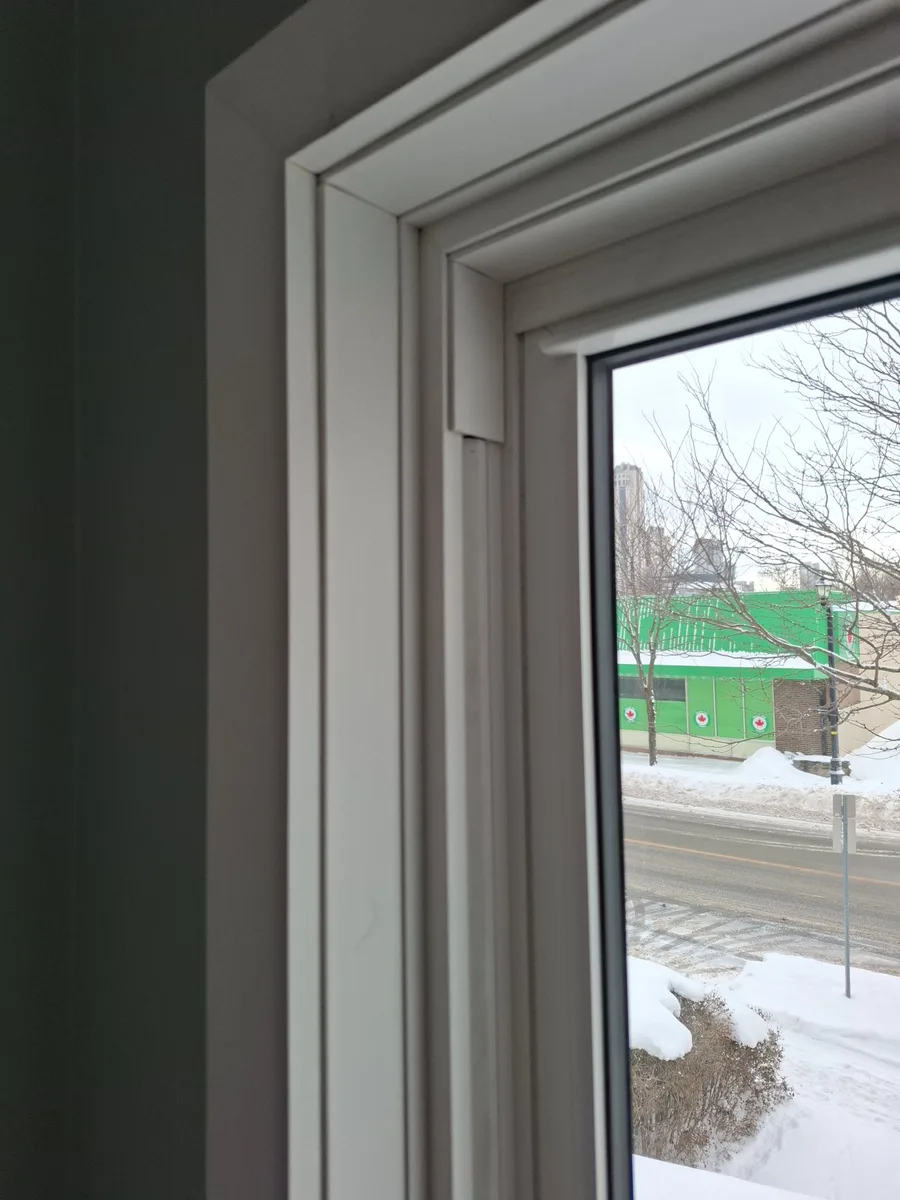
Where the room started
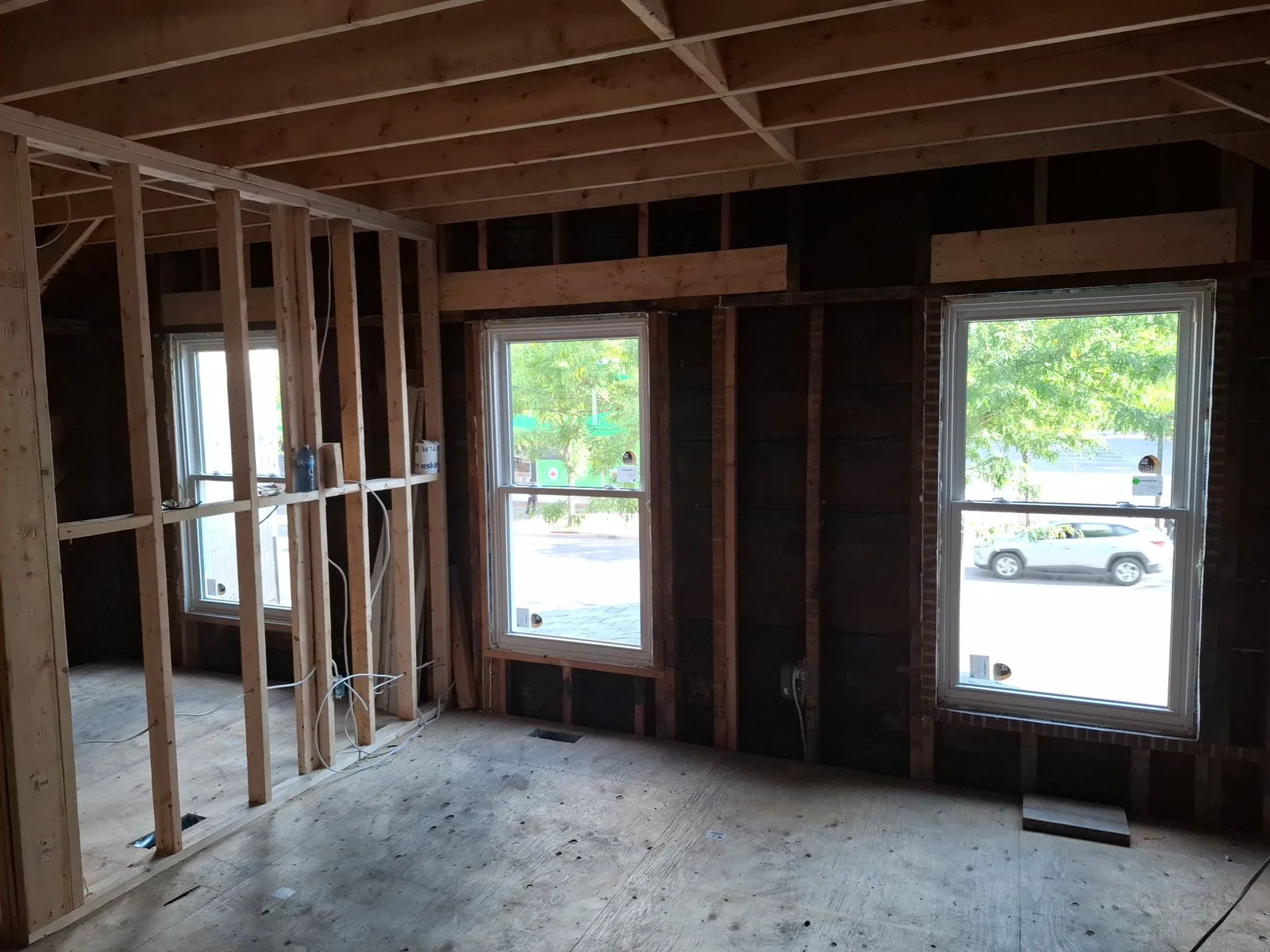
Our before photos show the bedroom stripped to the studs, with open ceiling joists overhead and dark original board sheathing on the outside walls. The old windows sat in openings that had seen decades of weather.
We cut the rough openings for the new windows and wrapped each one in Blueskin, a self-adhered membrane that seals the sill and sides before the window goes in.
Windows first, then the walls
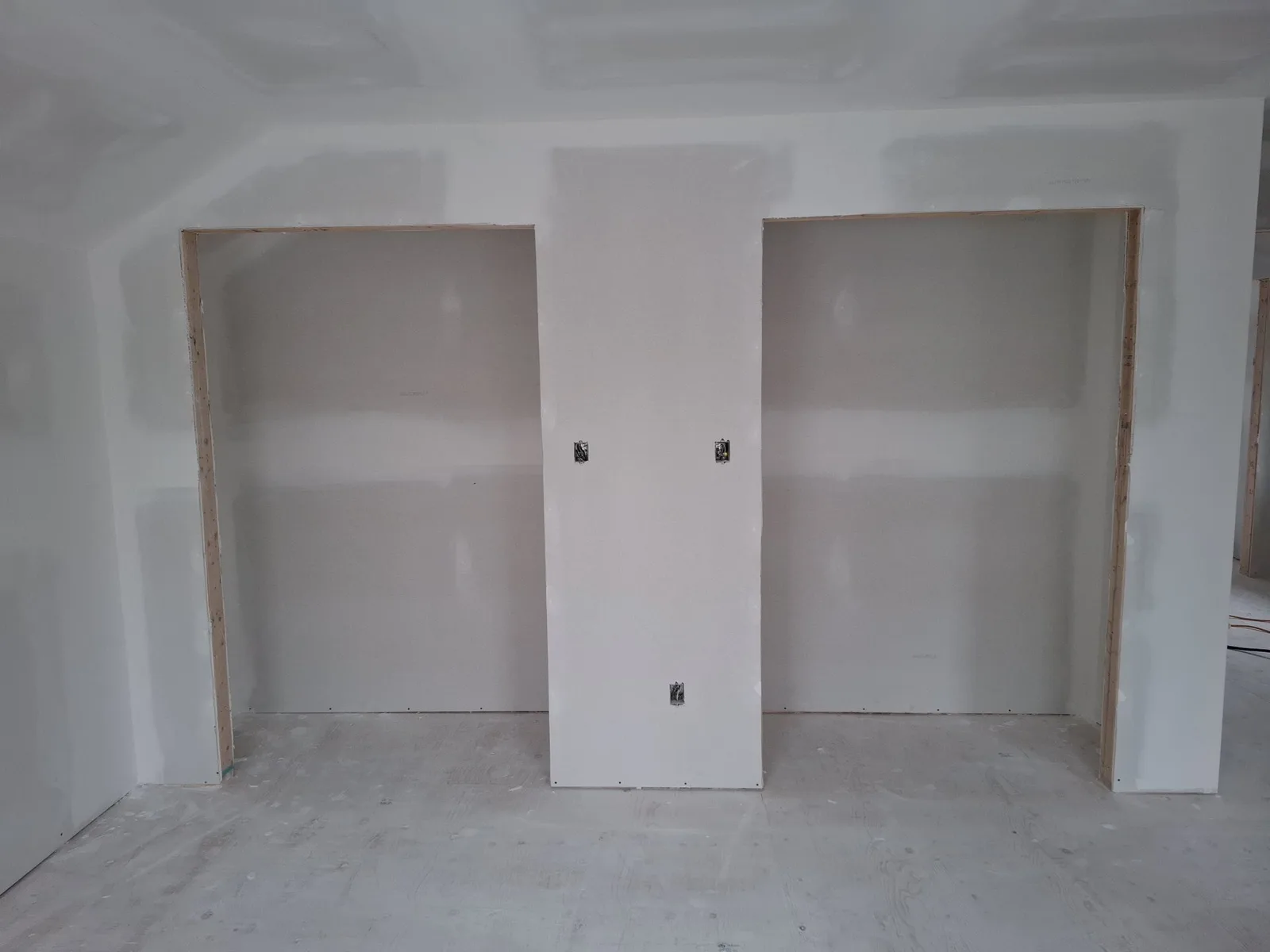
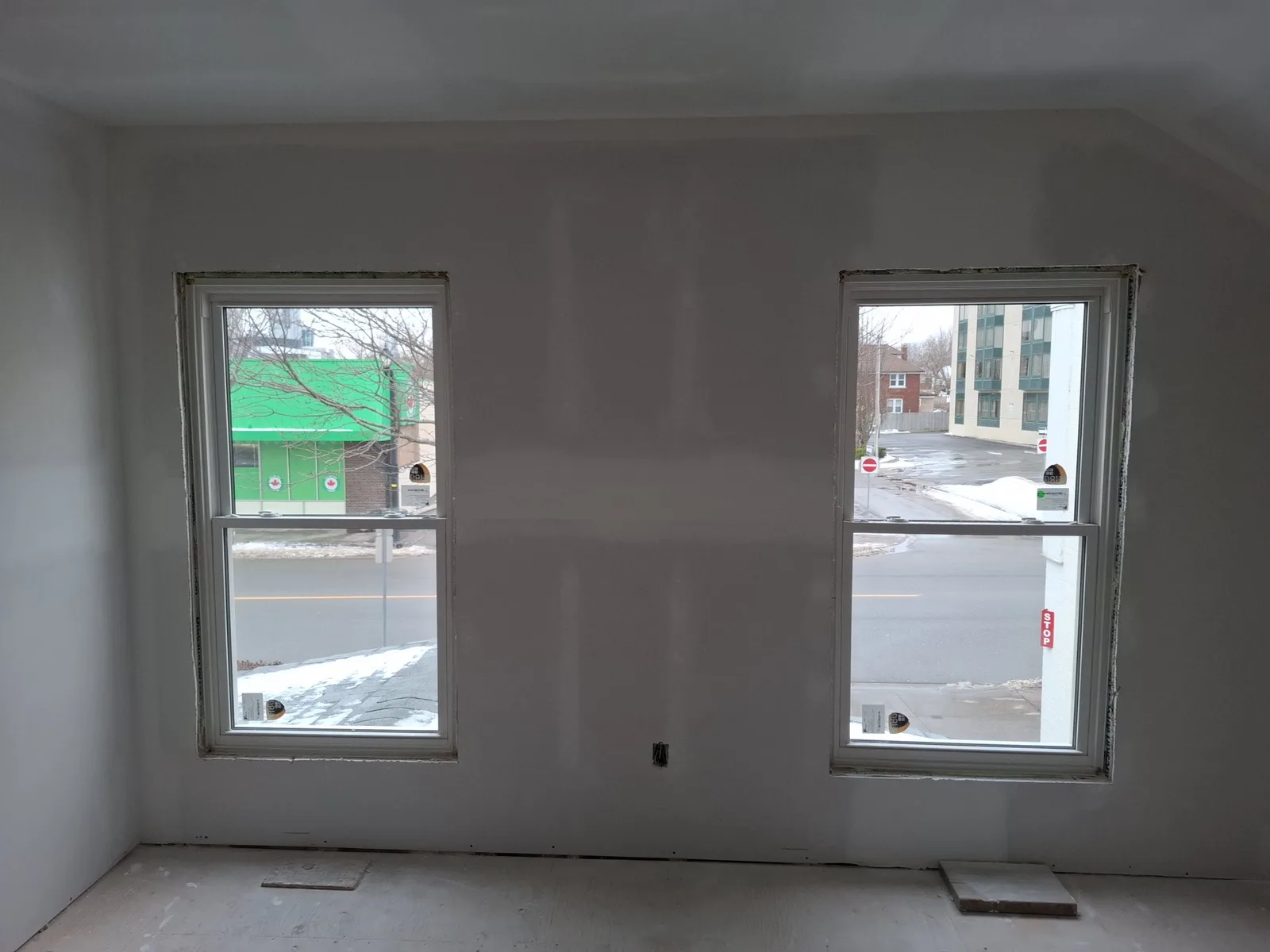
We set new white vinyl double-hung windows into the flashed openings, then hung drywall around them and framed two closet openings on the long wall. Doing the windows before drywall lets us check the flashing and insulation at every edge while it's still visible.
Once the trim goes on, you can't see the flashing. In Niagara, driving rain and freeze-thaw cycles find any gap at the sill, and water that gets past the window ends up in the wall. A sealed opening keeps that water outside.
Trim, closets and floor
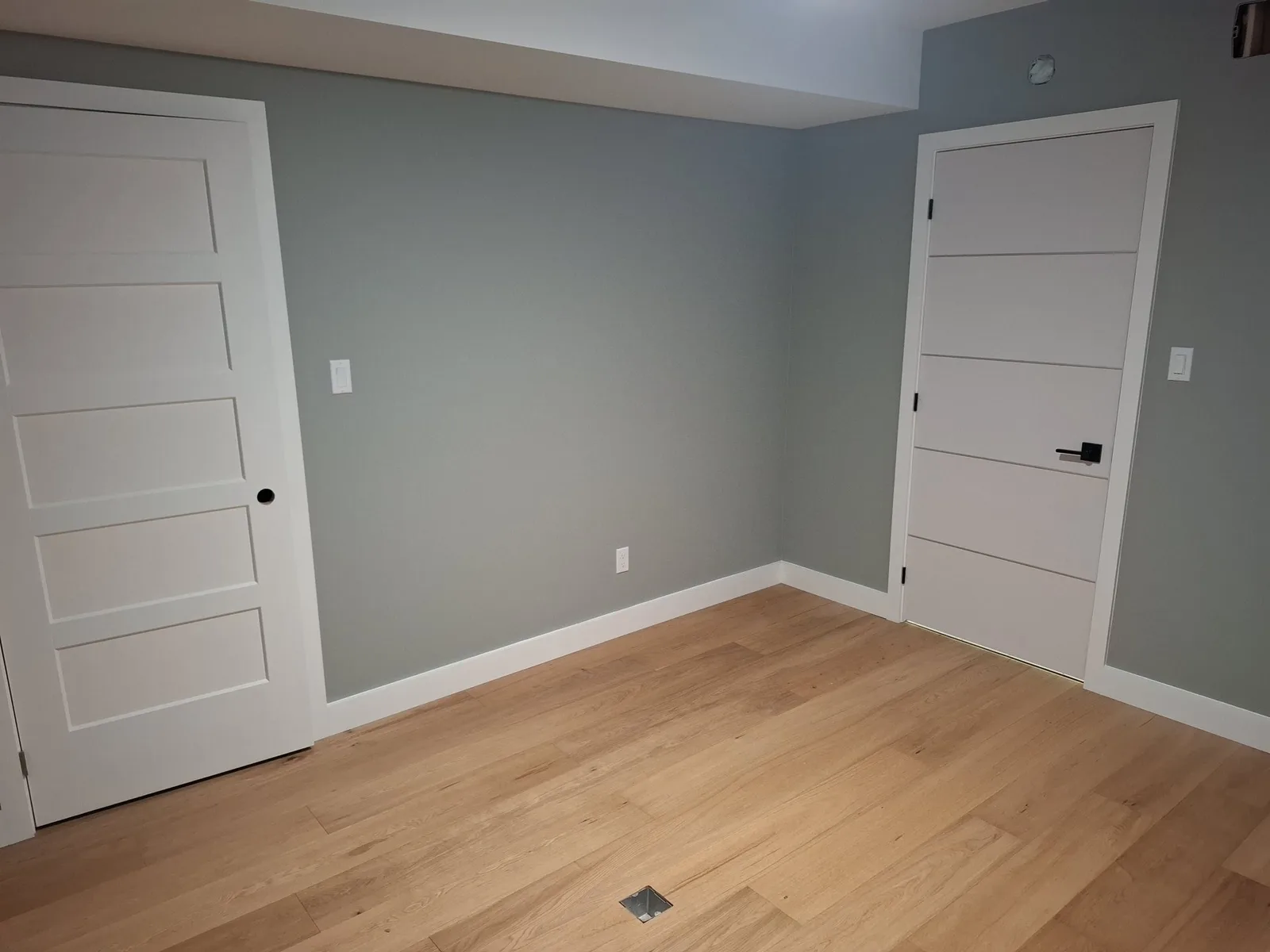
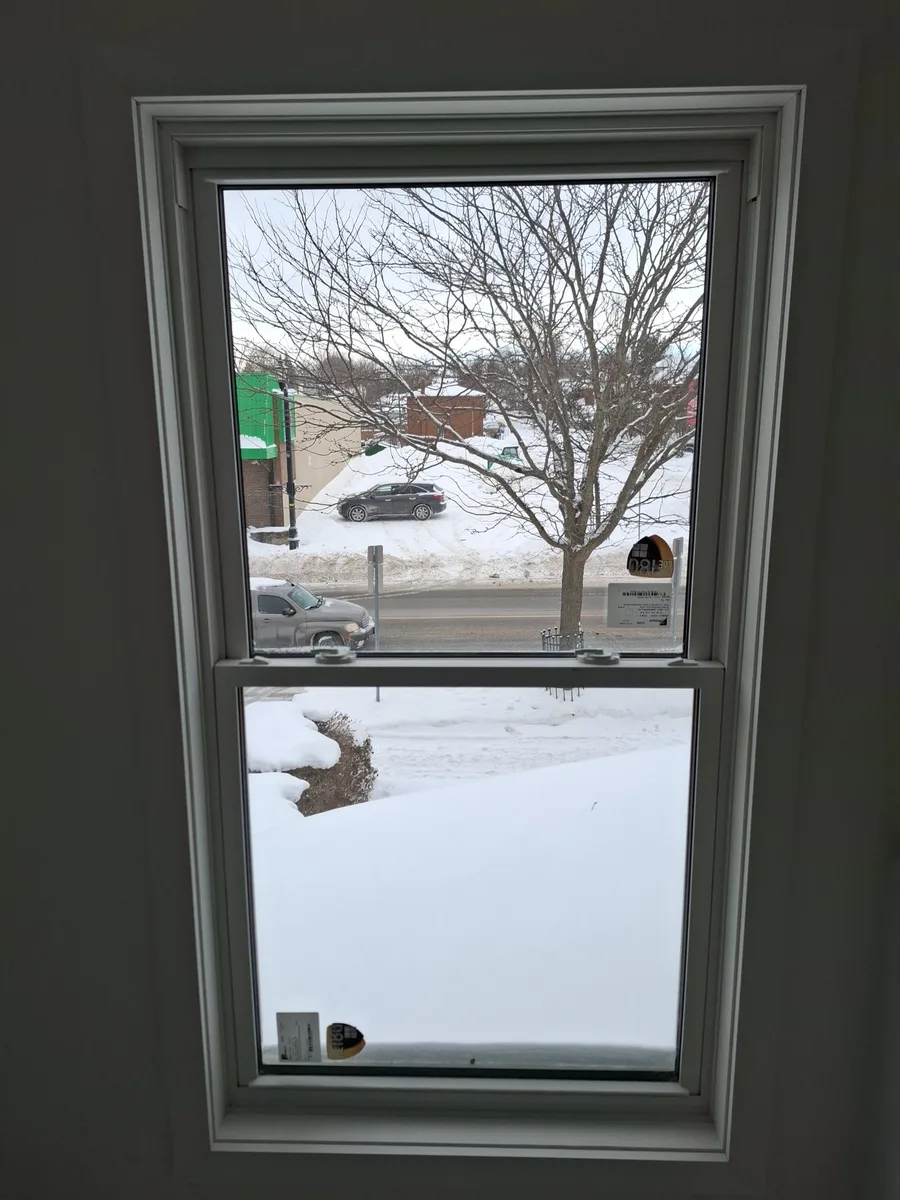
Each window got built-up white casing: a moulded casing with a flat outer band around it, which gives a plain vinyl window the weight of an older wood frame. The walls went sage blue-grey against white baseboards.
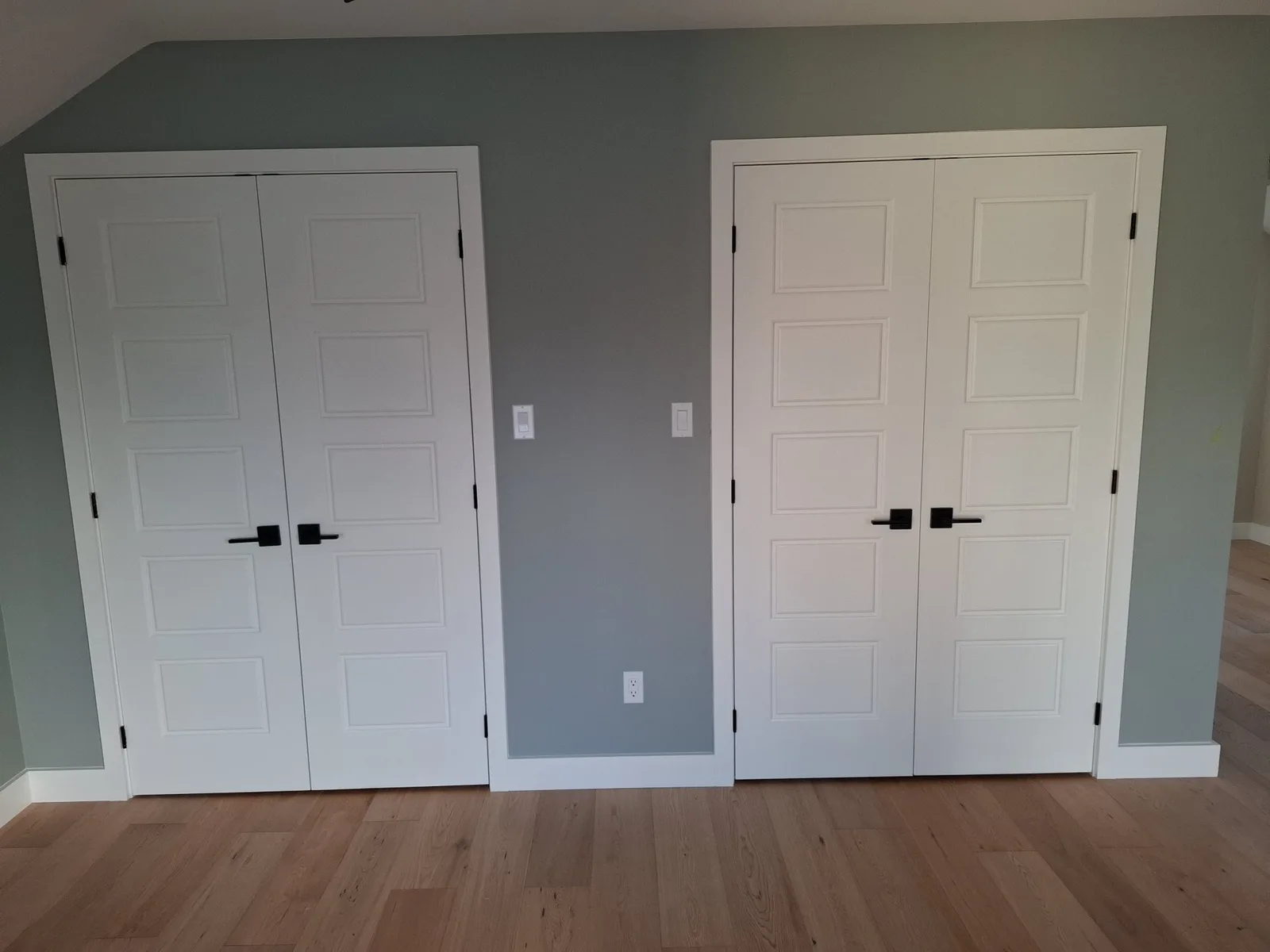
The two closets have white five-panel double doors with matte black levers. Inside, each one holds a white organizer tower with shelves and drawers and chrome hanging rods on either side. A wide-plank natural oak floor runs through the room and into both closets.
Planning a similar bedroom upgrade
If your windows are near the end of their life, replace them during the bedroom renovation instead of after. You avoid cutting into new drywall and paint later, and the trim goes on once.
Think about closet storage at the framing stage, too. We framed both closet openings to fit double doors and a standard organizer tower, so the shelving went in without trimming or shimming. Deciding on the closet system after the drywall is up often leaves you with a tower that is an inch too wide or a door that hits the drawers.
Upper-floor bedrooms under a roof also run warmer in summer and colder in winter than the rest of the house. With the walls open, you can add insulation and air sealing without tearing anything out later, and you will notice the difference every season.